Day 1
Embark Puerto Madryn
The voyage begins on the Patagonian coast at Puerto Madryn, where you board in the afternoon and set a course for the Falkland Islands. The sheltered waters of Golfo Nuevo are a favourite haunt of southern right whales, so the wildlife watching can begin before we are in the open ocean.
Days 2 - 3
Across the South Atlantic
Two days at sea pass quickly in this part of the world. Albatross, storm petrels, shearwaters and diving petrels track the ship southeast, and the lecture programme begins in earnest.
Day 4
The Falkland Islands
The Falklands reward the patient traveller with remarkably approachable wildlife and waters patrolled by Peale's and Commerson's dolphins. Weather permitting, landings may include Steeple Jason, a wild outpost holding the world's largest black browed albatross colony of roughly 113,000 birds; Carcass Island, free of rodents and alive with breeding Magellanic and gentoo penguins and small endemic songbirds; and Saunders Island, where black browed albatross nest beside imperial shags, rockhoppers, kings and gentoos.
Day 5
Stanley, Falkland Islands
The Falklands capital has a Victorian charm all its own: brightly painted houses, tended gardens, English style pubs and the masts of century old clipper ships offshore. The excellent little museum, covering everything from early settlement to the 1982 conflict, is included in the visit.
Days 6 - 7
Crossing the Convergence
On passage to South Georgia the ship crosses the Antarctic Convergence, where the sea temperature drops within hours and nutrient rich water rises to the surface. Albatross, shearwaters, petrels, prions and skuas gather over this invisible boundary in impressive numbers.
Days 8 - 10
South Georgia
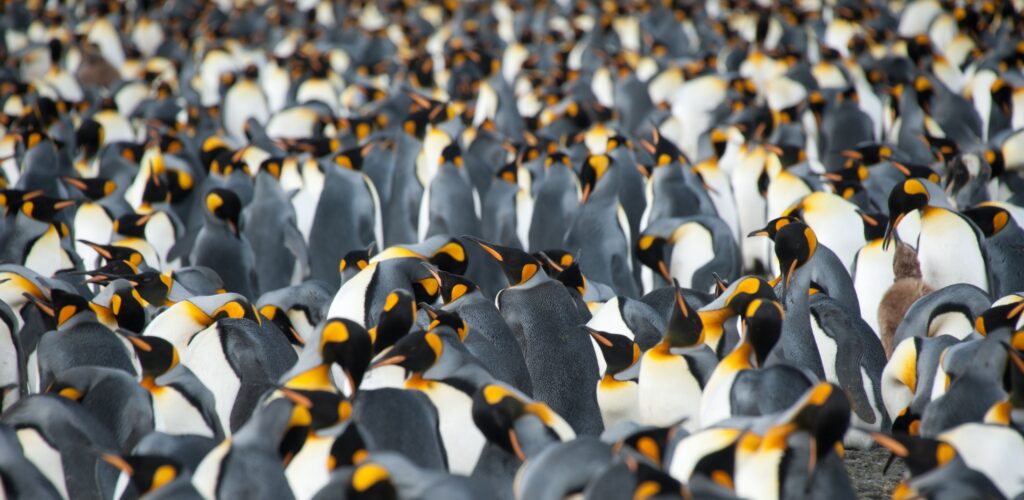
Four days are given to the island many regard as the finest wildlife destination on Earth, with weather setting the daily programme. Possible landings include Salisbury Plain, St Andrews Bay and Gold Harbour, home to South Georgia's three largest king penguin colonies and some of the world's greatest breeding beaches for southern elephant seals, where four tonne bulls stand guard over newly born pups at exactly this time of year. Fortuna Bay offers king penguins beneath a glacier and the chance to walk the final leg of Shackleton's famous crossing to the old whaling station at Stromness. At Grytviken, king penguins wander the ruins of the whaling era, and the South Georgia Museum and Shackleton's grave lie a short walk from the landing beach. On the afternoon of day 11, conditions permitting, the ship turns south for the South Orkneys.
Day 12
South towards the ice
Sea ice may appear along this stretch, and with it new companions: south polar skuas and snow petrels join the seabirds trailing the ship.
Day 13
The South Orkney Islands
Rarely visited and dramatically glaciated, the South Orkneys make a memorable stop. At Shingle Cove on Coronation Island, a lively Adelie penguin colony occupies the gravel beaches and weathered rock, with nesting petrels and lounging elephant and fur seals nearby.
Days 14 - 15
The last passage south
Enormous icebergs and a good chance of fin whales keep the decks busy on the final sea days south, and this stretch offers the best odds of the voyage for Antarctic petrels. Activities are planned to begin on the afternoon of day 14, conditions allowing.
Days 16 - 18
The Antarctic Peninsula
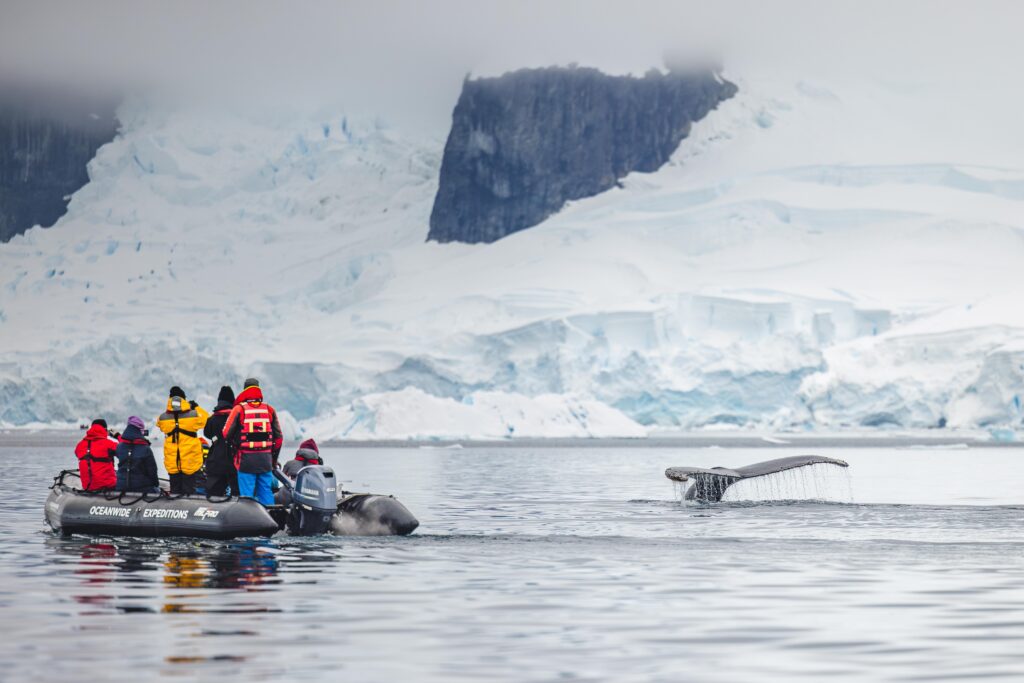
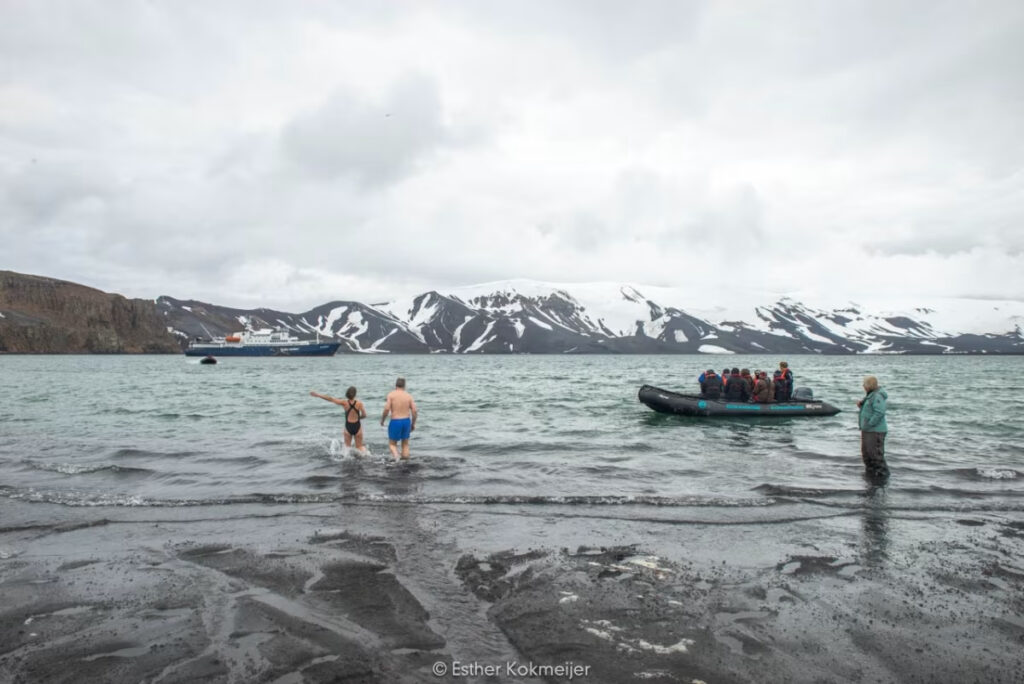
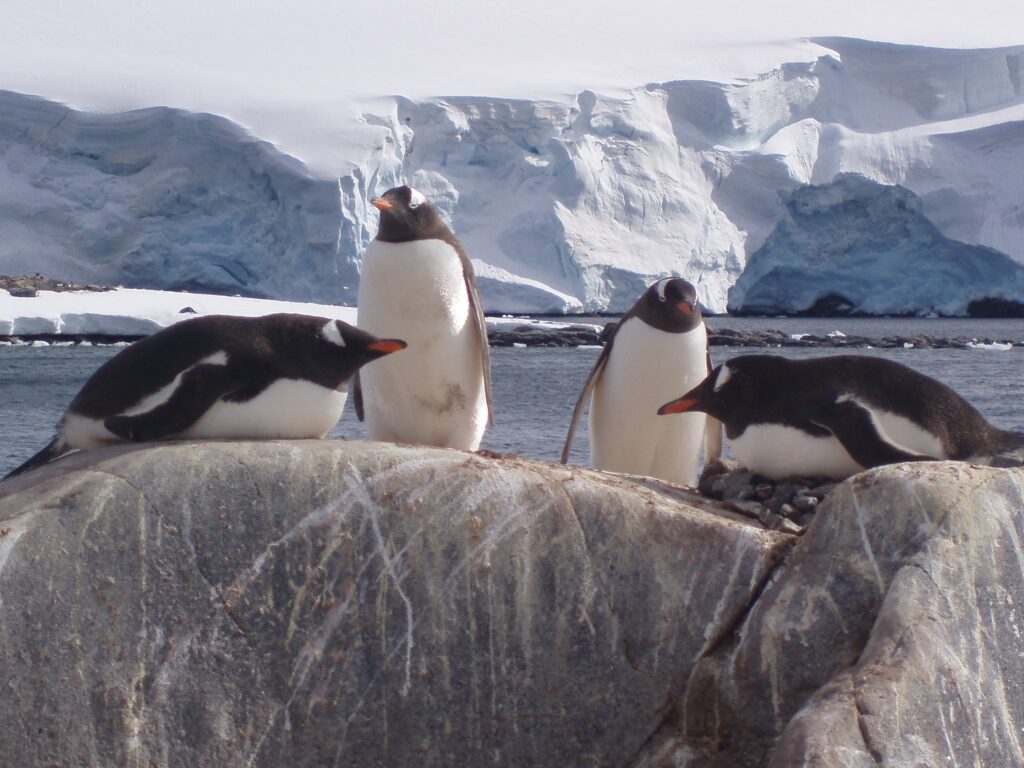
If the ice permits, the ship enters the Weddell Sea, where colossal tabular icebergs announce the eastern side of the Peninsula. Paulet Island, with its huge Adelie colony, is a possible landing, as is Brown Bluff in the Antarctic Sound, one of the finest places to set foot on the continent itself. Should the eastern approach be closed, the ship steers instead for Elephant Island and the Bransfield Strait, exploring the windswept volcanic South Shetlands: Half Moon Island with its chinstrap penguins and Weddell seals, and Deception Island, entered through the narrow gap of Neptune's Bellows into a flooded volcanic caldera scattered with whaling relics and thousands of cape petrels. Further south along the western Peninsula coast, landings amid alpine peaks and calving glaciers bring gentoo penguins, leopard and Weddell seals, and humpback and minke whales. Conditions in the Drake Passage set the hour of departure.
Days 19 - 20
The Drake Passage
The seabirds that escorted the ship south reappear on the homeward crossing, familiar companions now, as the lecture team rounds off the story of the voyage.
Day 19
Disembark Ushuaia
The ship berths in Ushuaia, the world's southernmost city, at the tip of the Tierra del Fuego archipelago. Disembarkation follows breakfast.
Day 1
Embark Ushuaia
The expedition begins in Ushuaia, the small, mountain backed town at the southern tip of Tierra del Fuego that likes to call itself the end of the world. You embark in the afternoon and spend the first evening gliding along the Beagle Channel, its shores rising steeply on either side, before the open sea takes over.
Day 2
At sea towards the Falklands
A full day of open water sets the tone for the voyage. The prevailing westerlies carry a constant escort of seabirds, and black browed albatross, giant petrels, prions and shearwaters wheel behind the ship as the expedition team opens the lecture programme.
Days 3
The Falklands
Landfall in the Falklands brings some of the most approachable wildlife of the whole trip, in waters where Peale's and Commerson's dolphins often ride the bow. Conditions permitting, the day may take in outposts such as Carcass Island, free of rodents and busy with breeding Magellanic and gentoo penguins, or Saunders Island, where black browed albatross nest alongside rockhopper and king penguins and imperial shags.
Day 4
Stanley
The islands' little capital repays a wander: rows of brightly painted houses, neat gardens, a pub or two and the hulks of old sailing ships in the harbour. The museum is well worth the visit, tracing island life from the first settlers through to the events of 1982.
Day 5 - 6
Towards South Georgia
Two days of sailing carry the ship across the Antarctic Convergence, the invisible frontier where the sea cools sharply within hours and the air takes on an Antarctic edge. Nutrient rich water rising here draws albatross, petrels, prions and skuas in growing numbers.
Days 7 - 10
South Georgia
Four days are set aside for the island widely held to be the greatest wildlife stage on Earth, with the daily plan bending to the weather. Likely landings include Salisbury Plain, St Andrews Bay and Gold Harbour, whose king penguin colonies number in the hundreds of thousands and whose beaches heave with southern elephant seals guarding their pups. At Fortuna Bay, king penguins gather below a glacier and walkers can trace the last stretch of Shackleton's crossing into Stromness, while at Grytviken the old whaling station, the island museum and Shackleton's grave lie a short stroll from the shore.
Day 11
South towards the ice
Turning south for the South Orkneys, the ship enters colder, ice flecked seas. New birds appear over the wake, among them snow petrels and south polar skuas, sure signs that the Antarctic proper is close.
Days 13 - 14
Entering Antarctica
Two more days at sea bring the largest icebergs yet and a strong chance of fin whales feeding along the way, with Antarctic petrels most likely on this southern run. Activities are timed to begin as the ship reaches the ice, weather allowing.
Days 15 - 16
The Antarctic Peninsula
If the ice opens the way, the ship pushes into the Weddell Sea past towering tabular bergs, where Paulet Island and its vast Adelie colony and Brown Bluff on the Antarctic Sound offer the chance to stand on the continent itself. Should that eastern door be closed, the route turns to the South Shetlands and the western Peninsula instead, with chinstraps and Weddell seals at Half Moon Island, the flooded caldera of Deception Island, and glacier lined bays alive with gentoos, leopard and Weddell seals and feeding humpback and minke whales. The state of the Drake decides when the ship turns for home.
Days 17 - 18
The Drake Passage
The homeward crossing returns the ship to the company of the great seabirds, now familiar travelling companions, while the expedition team draws the threads of the voyage together.
Day 19
Disembark Ushuaia
The ship comes alongside in Ushuaia after breakfast and the expedition ends. As always in these waters, the programme is a guide rather than a promise: ice, weather and wildlife have the final word, and every landing follows IAATO rules under the expedition leader's direction.
















 Depart