Planning your trip
When Is the Best Time to Visit Antarctica?
Choosing the Right Season for Your Voyage
Antarctica is never still. Though often imagined as a frozen, silent world, the seventh continent is profoundly alive — shifting with the seasons, glowing under endless summer light, and filled with wildlife that transforms with each passing month. Travelling here is not simply a holiday; it is an invitation into a living, breathing polar ecosystem. And depending on when you go, the entire character of the continent changes.
Most travellers visit between November and March, when temperatures are mild by Antarctic standards, the wildlife is at its most active, and the sun stretches across the sky for long, golden hours. This is the austral summer, when the sea ice loosens its grip, penguin colonies come to life, and the Southern Ocean becomes a stage for whales, seals, seabirds, and drifting icebergs sculpted by wind and tide.
The best way to experience it all is on a small ship (under 200 passengers), the kind that can weave through narrow channels, negotiate early-season pack ice, and slip into sheltered coves where wildlife congregates. These vessels range from basic to lux in style and provide comfort, warmth, and a remarkable sense of immersion, letting you step ashore, kayak among icebergs, and feel the scale of Antarctica all around you.
When Is the Best Time to Go to Antarctica?
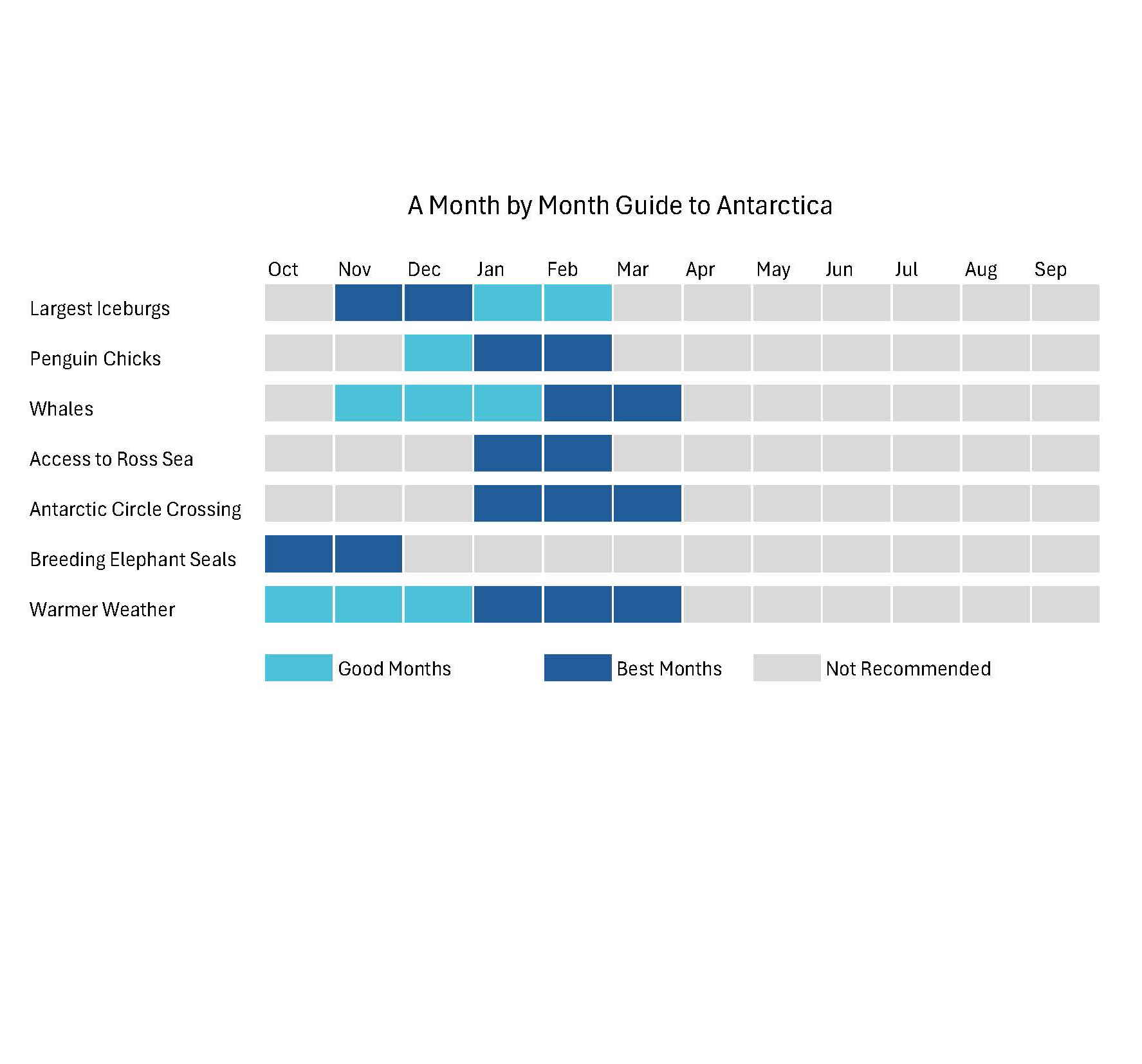
Antarctica’s short travel season runs from early November to late March, during the austral summer. At this time of year, daylight can stretch beyond 20 hours, and daytime temperatures typically range between –4°C and +4°C.
This is a stark contrast to the formidable Antarctic winter, when the sun disappears for months and temperatures can plummet below –37°C in the interior.
As the sun returns in spring, the continent awakens. Sea ice begins to retreat, forming glittering icebergs and sculptural fragments of frozen sea. Wildlife springs into action, penguins gather to court and nest, seals raise pups, and great whales migrate back into the nutrient-rich Southern Ocean.
Travelling on a smaller vessel allows guests to navigate areas of early season ice and witness these dramatic changes up close.
Antarctic Weather
Visitors can only travel to Antarctica during the summer months, when the weather is at its mildest. Even then, this is still one of Earth’s harshest environments, shaped almost entirely by sunlight—or the lack of it.
Despite being 98 per cent covered in ice, Antarctica is technically a desert, receiving only around five centimetres of precipitation each year. Powerful katabatic winds sweep down from the polar plateau, sometimes reaching more than 185 km/h, and combine with maritime systems to create fast-changing conditions.
Still, summer offers a relatively gentle window into this extreme world, with each month delivering its own blend of weather, light, and wildlife encounters.

November – The Start of the Season
The season begins quietly, with late October through November offering a pristine landscape that feels closer to a polar dreamscape than a destination. The sea ice is still ice filled, the snow fresh, and the light soft and low, creating an otherworldly calm. Average temperatures hover around –4°C to –1°C, and early-season expeditions deliver some of the most ethereal scenery of the year.
Penguins begin returning to shore, shuffling across the white canvas to stake out nesting sites and launch into the rituals of courtship. On the beaches, elephant seal pups may still be clinging to their gigantic mothers, scenes that are both dramatic and deeply moving. Because the ice is still widespread, travelling at this time offers a rare sense of solitude — just you, your expedition team, and a continent beginning to stir.
This is also when adventurous travellers can often enjoy snowshoeing, camping on the ice, or even skiing on untouched slopes, conditions permitting. It is Antarctica at its most unfiltered: raw, silent, breathtakingly pure.
December & January: Wildlife in Full Glory
By December, the continent has fully awakened. Temperatures rise to around 0°C to +4°C, and daylight stretches into near-permanent brightness. Sea ice retreats, opening up channels for deeper exploration, and the wildlife activity is nothing short of exhilarating.
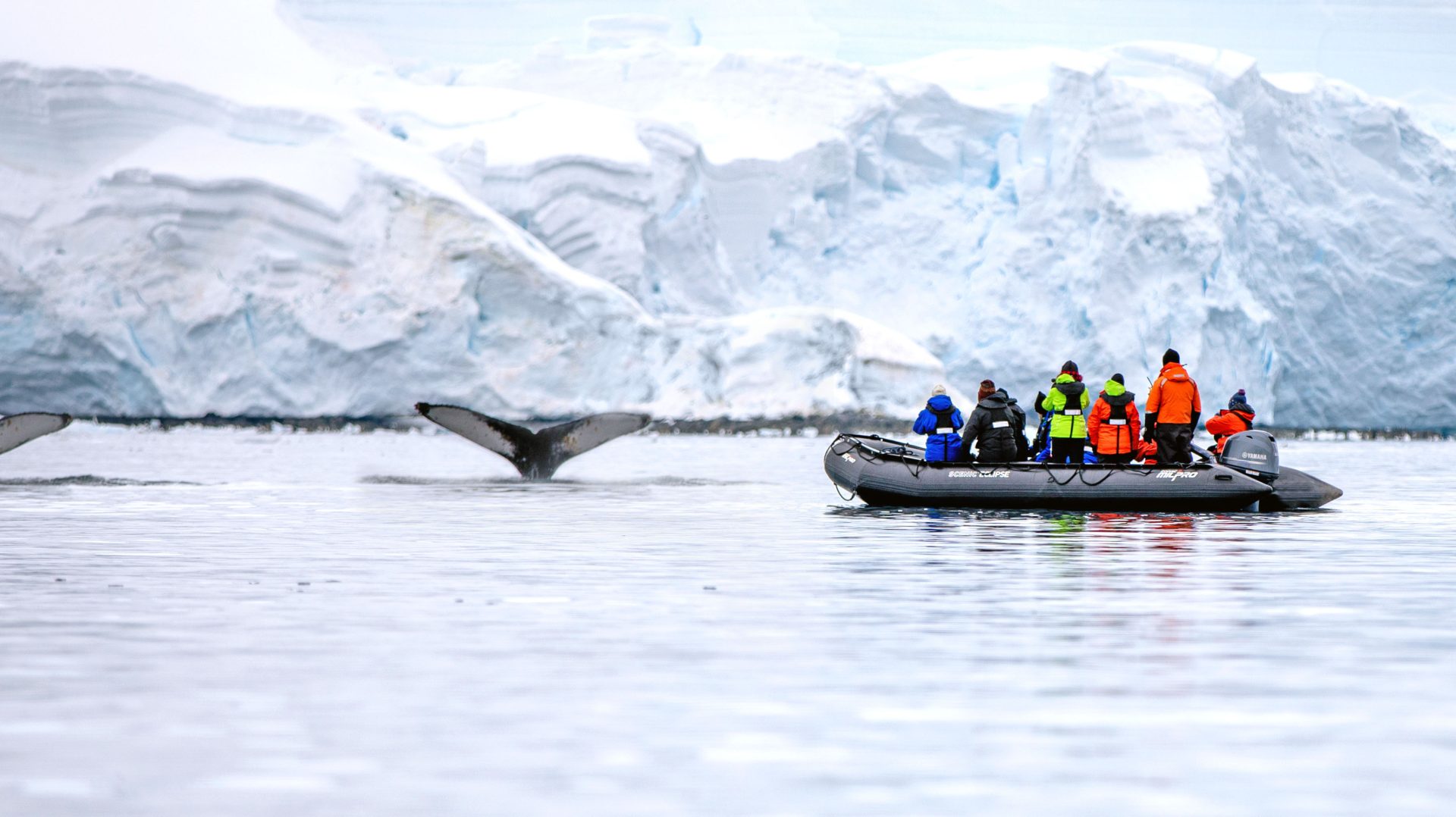
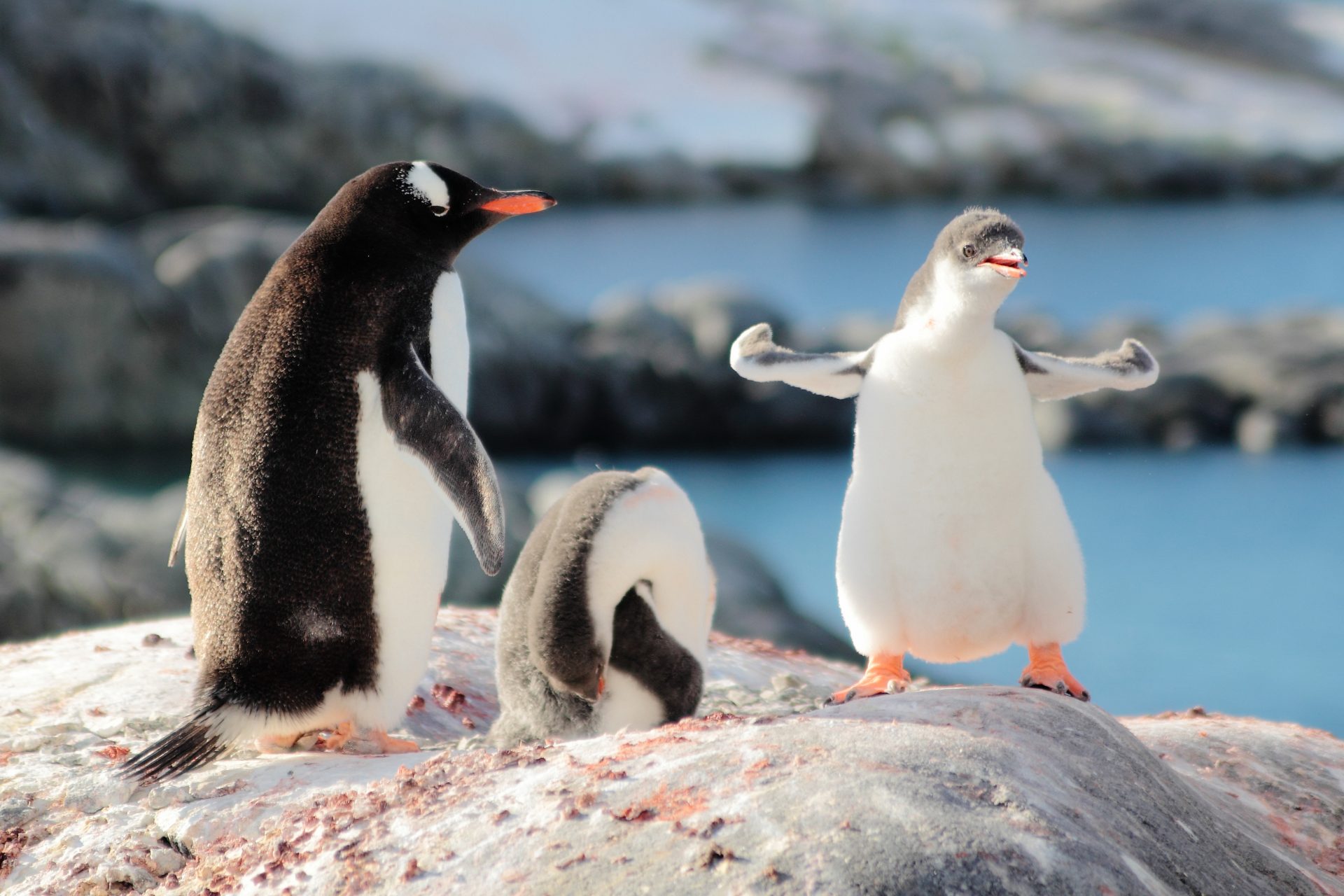
Penguin chicks begin to hatch, fluffy and curious, tottering around rookeries as their parents shuffle back and forth with food. Fur seals gather in impressive numbers, their pups learning to navigate both land and sea, while crabeater and weddell seals bask on ice floes with a contented indifference to the passing ships. Offshore, humpback whales return to feed on the summer bloom of krill, and orcas may appear in coordinated hunting pods, slicing through the water with astonishing agility.
The open sea also invites more activity for guests. Kayaking among sculptural icebergs becomes a highlight. Zodiac explorations reveal glassy bays, towering cliffs, and wildlife up close. Some travellers take part in the polar plunge, and on certain voyages, more adventurous options such as snorkelling or diving may be offered. These months are an unforgettable blend of energy, life, and long days that seem to glow without end.
February & March: Whales, Soft Light, and a Season’s Finale
Late summer is a feast for the eyes — and for the whales. As February begins, the sea ice reaches its annual minimum, allowing ships to venture even farther south. Temperatures remain pleasant, typically between –2°C and +4°C, and the atmosphere takes on a quiet richness as the angle of the sun begins to soften.
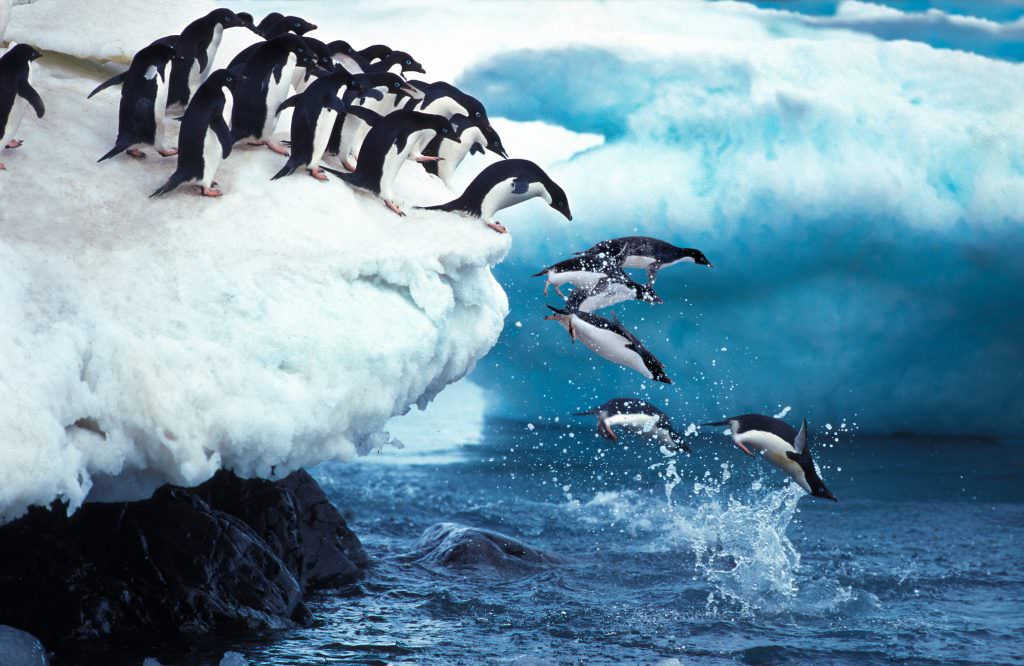
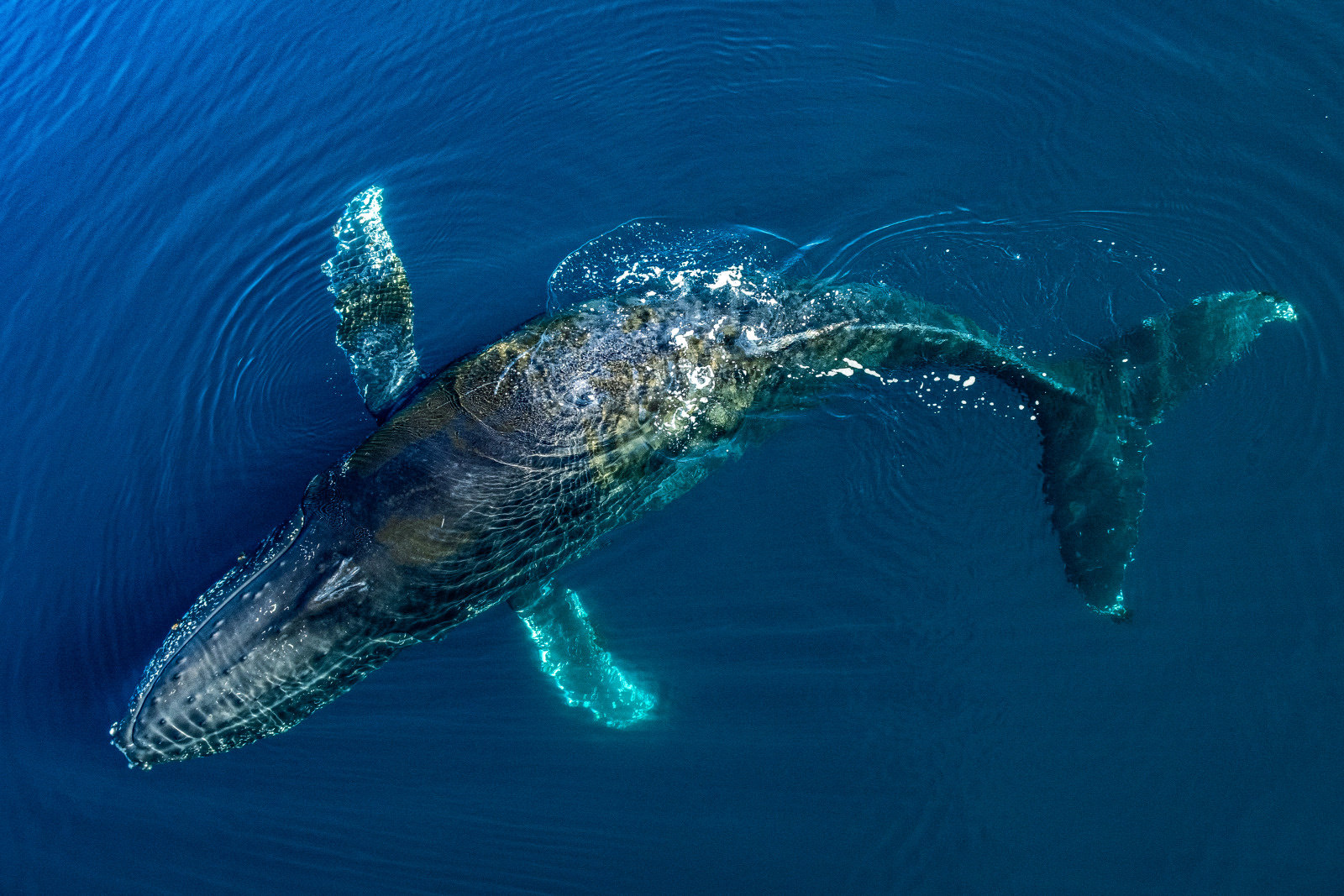
Young penguins gather at the water’s edge, bracing themselves for their first plunge into the sea. Many stand hesitantly, wings out, while the braver chicks waddle straight in, sending ripples across the still water. Whale encounters become more frequent and more intimate; humpbacks, minkes, southern rights and sometimes fin or blue whales feed vigorously, often surfacing close enough that you can hear the deep whoosh of their breath.
The light becomes extraordinary — long shadows, warm hues, and sunsets that stretch across the horizon in shades of apricot, rose, and violet. On some days, patches of “watermelon snow” appear, tinting the surface pink or green due to natural algae blooms. It is a beautiful, quietly dramatic time, perfect for photography and reflection, ideal for travellers who love the combination of abundant wildlife and poetic polar light.
April and Beyond – A Continent at Rest
By April, Antarctica returns to the deep freeze. The sun dips low, temperatures fall well below –10°C, and the sea begins to lock up once more. Winter winds roar across the ice, daylight shrinks to a faint glow, and only scientific teams remain. The travel season closes, and the continent settles into silence until spring returns again.
Travel Essentials for an Antarctic Expedition
Despite its reputation, Antarctica is surprisingly comfortable to visit in summer—provided you’re well equipped. Ships today offer warm, modern cabins, excellent dining, and inviting spaces like saunas, lounges, or hot tubs to unwind after time ashore.
Most operators supply guests with a polar parka, and waterproof boots are typically provided for landings. Layers, gloves, thermal socks, and sun protection are essential.
Reaching Antarctica usually involves a journey via Buenos Aires or Santiago, followed by a flight or ship voyage from Ushuaia at the tip of South America. Many travellers cross the historic Drake Passage, while others opt for direct charter flights to the Antarctic Peninsula.
There is no single “best” month — only the experience that suits you. Choose early summer for pristine snowscapes, intimate penguin courtship, and a sense of untouched wilderness. Choose mid-season for the dazzling energy of chicks, pups, and whales against endless daylight. Choose late summer for extraordinary whale encounters, fledging penguins, and the most evocative light of the year.
Antarctica is not a destination you watch from afar — it’s a place you step into, feel, and carry with you long after you return home. Whichever month calls to you, the experience will stay with you for life.